
Two-wheeler exports from India fell by 17.8 per cent to 3.65 million units in 2022-23 (FY23), according to data released by the Society of Indian Automobile Manufacturers (Siam) on Thursday. This decline is due to a rise in global inflation and the weakening of economies and currencies in key export markets of Africa, Latin America (LatAm), and South Asia. In contrast to FY23, two-wheeler exports from India jumped 35.4 per cent to 4.44 million units in 2021-22 (FY22).
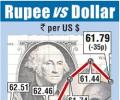
Traders say the rupee and other global currencies will likely track the continued uncertainty in the US budget stalemate and government shutdown.

For the first time, the rupee declined to the low level of 80 against the US dollar in intra-day spot trading on Monday before ending the session 16 paise lower at 79.98 amid a surge in crude oil prices and unrelenting foreign fund outflows. At the interbank forex market, the local unit opened at 79.76 against the greenback but lost ground to touch the psychological low mark of 80 against the American currency. The local unit clawed back some lost ground and closed at 79.98, registering a fall of 16 paise over its previous close.
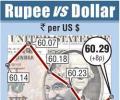
The rupee appreciated by 10 paise to close at a nearly six-week high of 60.29 against the US dollar in the previous session tracking a solid rally in local shares and continued dollar selling by exporters and some banks.

Forex dealers said besides the dollar gaining against other currencies in the global markets on the back of a strong US economy, increased demand for the American unit from importers weighed on the rupee but a higher opening in the domestic equity markets, capped the fall.

The US dollar surged to fresh one-year high after the Fed chief's testimony to the US Senate on Wednesday bolstered the expectations of interest rate hikes, though gradually.
The rupee has been under immense pressure due to a host of reasons including soaring crude oil prices, sustained foreign fund outflows and widening current account deficit.

In the global markets, the euro was under pressure against the US dollar yesterday, dragged lower as European monetary policy officials indicated willingness towards supporting more stimulus measures to aid the regional economy.

Bangladesh is in turmoil, which is not good news for India, which shares a porous 4000 km border with it. There is a danger of fundamentalism growing there, and India has to move in to reset its ties with the new dispensation before China and Pakistan make capital out of it, alerts Ramesh Menon.
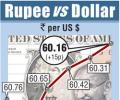
The currency got support from dollar flows into local equities and greenback sales from state-run lenders.

The deficit data was the latest in a run of positive signs for the sluggish domestic economy and could put India in a better position should the Fed start tapering, than in the summer when the rupee hit a record low.

Rupee ends day at 61.91 against the US dollar.

The rupee rose by 12 paise to close at 79.78 against the US dollar on Monday due to a weak dollar in overseas markets and an improved appetite for riskier assets. Stronger regional currencies also supported the rupee sentiment ahead of the US Fed policy decision on Wednesday. Weak domestic equities and FII outflows, however, capped sharp gains. At the inter-bank forex market, the local unit opened at 79.86 against the greenback and moved in a range of 79.70 to 79.87 in the day trade.

Foreign brokerage HSBC has said it expects the rupee to trade at 60-levels by December against the dollar even though risks on the domestic unit from both external and domestic fronts have increased.

India will soon meet Iraq and the United Arab Emirates (UAE) to seek a definitive rate of discount on crude oil similar to what Russia has provided so far, sources said. Multiple officials and industry executives said Iraq, which is India's biggest oil supplier, wants to discuss the level of discounts expected by Indian refiners. India's focus on snapping up ever-increasing volumes of Russian crude oil has led to a corresponding decline in imports from the Middle East. Flows from Iraq, Saudi Arabia, and the UAE have suffered as a result.

The dollar index was down 0.01 per cent at 95.86 against a basket of six currencies in early trade

The rupee had retreated from nearly two-week high and ended three paise lower at 60.12 against the Greenback in yesterday's trade.

Forex dealers said besides the dollar's gains against the euro overseas, increased demand from importers for the US currency and a lower opening in the domestic equity market also put pressure on the rupee.
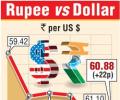
The rupee had dipped by a massive 67 paise to an all-time closing low of 61.10 against the dollar on Friday.
In New York, the US dollar swung higher against many of its rivals on Wednesday.

Prime Minister Narendra Modi on Sunday made a fresh push for reforms in global institutions, including the United Nations, asserting that the world's 'new realities' should be reflected in 'new global structure' as it is nature's law that those who don't change with times lose their relevance.

Sentiments turned buoyant after RBI on Monday cut the marginal standing facility rate, at which it lends emergency funds to banks, by 0.5 per cent to 9 per cent with an aim to improve liquidity and boost economic activities.
This is the highest closing level since May 11, 2016 when the rupee had finished at 66.56

Asia to stay flat in 2017. India is better-placed given its low export dependence and it should outperform Asian peers this year says Mixo Das, India strategist for financial major Nomura

Japan's Nikkei fell 0.5% and South Korea's Kospi lost 1.3%.

Earlier, the rupee resumed slightly lower by 60.77 as against the last closing level of 60.76 at the Interbank Foreign Exchange Market but it immediately gained strength to quote 60.69 in early trade on bouts of dollar selling by exporters.

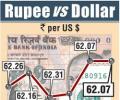
The rupee depreciated by 19 paise to trade at almost seven-month low of 61.94 against the US currency in early trade today at the Interbank Foreign Exchange on capital outflows amidst the dollar's gain against other currencies overseas.
The rupee had gained nine paise to close at nearly one- month high of 61.84 against the dollar in yesterday's trade after the government said in the interim Budget that fiscal deficit this financial year will be capped below target.

Investors turn cautious ahead of upcoming budget

The partially convertible rupee closed at 63.37/38 per dollar compared with 62.83/84 on Monday. The unit dropped 0.85 per cent on the day, its biggest single-day fall in two weeks.
The rupee closed 2 paise lower at 60.13 on Wednesday as a sudden demand for the US currency emerged at fag-end of trade.

The renminbi is expected to weaken another 2 per cent in six months.
Foreign funds sold Indian shares worth 446.9 million rupees ($7.4 million) on Wednesday, provisional exchange data showed, marking the third consecutive session of outflows.

The Director of the Peradeniya Hospital in the central district of Kandy on Monday announced the temporary suspension of all routine surgeries due to the shortage of medicine.

'IT companies do not have a large presence there either in terms of market and team. So, the impact of the war will be minimal. But West Asia is an emerging economy.'

This is possibly the first time Hasina's daughter will be by her mother's side during an official visit to close neighbour and ally India, and analysts believe this to be significant in many ways.
In recent sessions, shares have rallied on hopes Hindu nationalist opposition leader Narendra Modi, a more business-friendly candidate, is seen coming to power on promises of economic revival and jobs.

The dollar's strength against other currencies overseas limited the rupee's gain.
A fall in blue-chips such as Larsen and Toubro on anxiety ahead of the quarterly earnings season and inflation data hurt local shares.
Traders said good dollar demand from importers including oil companies was seen at stronger rupee levels, limiting any further gains.
